Friday, May 27, 2016

Hotel de Ville


The Hôtel de Ville de Paris has been the seat of the Paris City Council since 1357. The current building, with a neo-renaissance style, was built by architects Théodore Ballu and Edouard Deperthes on the site of the former Hôtel de Ville which burnt down during the Paris Commune in 1871. Visits to the town hall, a powerful and prestigious place, are possible. Guided tours are offered by reservation only and are organized by the city’s Protocol Department. Visitors can discover the function room, created as a replica of the Hall of Mirrors at Versailles. Free major exhibitions are also organized here and are a great success.


Hotel de Ville
Je vois...
  1. arched doorways - portes cintrées
  2. Ice rink - Patinoire
  3. Large staircase - Grand escalier
  4. Ballroom - salle de bal
  5. Painted ceilings - plafonds peints

J'entends...patineurs - ice skaters

Le Repas - Boudin Noir Aux Pommes

Le Dessert - Chocolate Mousse


Pont Alexandre III


The Pont Alexandre III is a deck arch bridge that spans the Seine in Paris. It connects the Champs-Élysées quarter with those of the Invalides and Eiffel Tower. The bridge is widely regarded as the most ornate, extravagant bridge in the city.  It is named after Tsar Alexander III, who had concluded the Franco-Russian Alliance in 1892. His son Nicholas II laid the foundation stone in October 1896. The style of the bridge reflects that of the Grand Palais, to which it leads on the right bank.


Pont Alexandre III
Je vois...

  1. A bridge - Un pont
  2. Pylons - Pylônes
  3. Boats - Bateaux
  4. Sculpture of fish - Sculpture de poissons
  5. A river - Une rivière
J'entends...la rivière - the river
Le Repas - Soupe à L’oignon


Le Dessert - Île flottante


Wednesday, May 25, 2016

Tuileries Garden


Le Jardin des Tuileries is also known as the Tuileries Garden. It is a very popular public park and garden in Paris, France. It is situated right in the center of the city, between the Musée du Louvre and the Place de la Concorde. It is close to all of the major attractions in Paris. The garden area is small, but is ornately decorated with fountains and sculptures that have historical importance. The collection is very impressive and features sculptures by many prominent names such as Jean Dubuffet, Coysevox, Giacometti and Rodin.


Tuileries Garden
Je vois...

  1. Ice cream parlor - salon de crèmeglacée
  2. Ponds - étangs
  3. Benches - la banquette
  4. Ducks - Canards
  5. Grass - herbe
J'entends...feuilles bruissantes - rustling leaves
Le Repas - Blanquette de Veau


Le Dessert - Mille-Feuille


Friday, May 13, 2016

Les Invalides


Les Invalides, commonly known as Hôtel national des Invalides, or also as Hôtel des Invalides, is a complex of buildings in the 7th arrondissement of Paris, France, containing museums and monuments, all relating to the military history of France, as well as a hospital and a retirement home for war veterans, the building's original purpose. The buildings house the Musée de l'Armée, the military museum of the Army of France, the Musée des Plans-Reliefs, and the Musée d'Histoire Contemporaine, as well as the Dôme des Invalides, a large church with the burial site for some of France's war heroes, most notably Napoleon Bonaparte.

Les Invalides
Je vois...
  1. A dome - Un dôme
  2. Shrubs - Arbustes
  3. A tomb -  Une tombe
  4. Old weapons - armes anciennes
  5. Chapel - Chapelle

J'entends...une annonce - an announcement

Le Repas - Baked Camembert

Le Dessert - Chouquettes

Le Palais Garnier


The Palais Garnier, known also as the Opéra de Paris or Opéra Garnier, but more commonly as the Paris Opéra, is a 1,600-seat opera house on the Place de l'Opéra in Paris, France, which was the primary home of the Paris Opera from 1875 until 1989. A grand building designed by Charles Garnier in the Neo-Baroque (or "Baroque Revival") style (it is also said to be of the related Second Empire style), it is regarded as one of the architectural masterpieces of its time. The building is located in the 9th arrondissement of Paris

Palais Garnier

Je vois...

  1. Busts - les bustes
  2. Marble columns - colonnes de marbre
  3. Theatre - théâtre
  4. Foyer - foyer
  5. Tapestries - des tapestries

J'entends...chanteurs d'opéra - opera singers

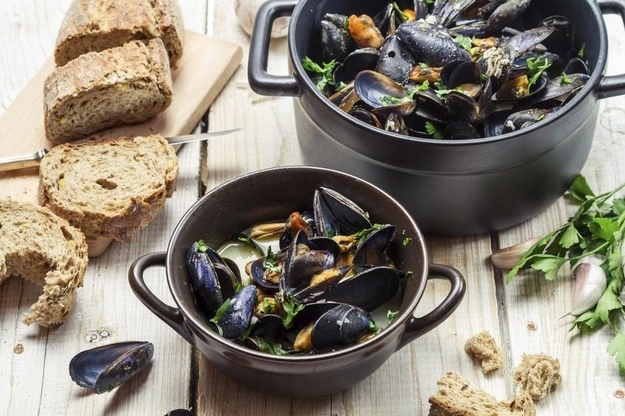
Le Repas - Moules Marinières
Moules Marinières

Le Dessert - Meringues


Le Palais de Versailles


The Palace of Versailles is the central part of a complex that housed the French government, most notably its royalty, during the reigns of Louis XIV (France’s famed “Sun King”), Louis XV and Louis XVI. After the French Revolution in 1789, it ceased to be a permanent royal residence.
Located about 10 miles (16 kilometers) southwest of Paris, it is beside the settlement of Versailles. Before the construction of the palace by Louis XIV, this settlement was little more than a hamlet but by the time of the revolution it had a population of more than 60,000 people, making it one of the largest urban centers in France.

Versailles Palace

Je vois...
  1. Patterned tiles - carreaux a motifs
  2. A chandelier - un lustre
  3. Gold pillars - piliers d’or
  4. The candles - les bougies
  5. A gate - une porte

J'entends...trace de pas - footsteps

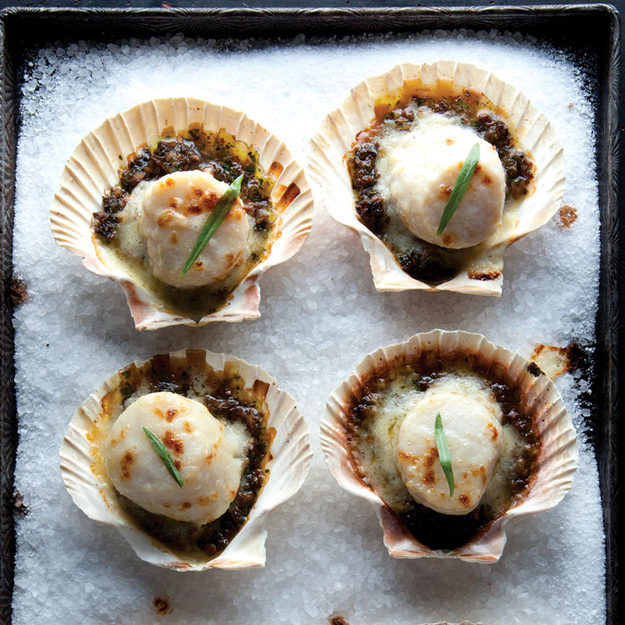
La Repas - Coquilles Saint-Jacques
Coquilles Saint-Jacques

Le Dessert - Kouglof


Le Jardin de Luxembourg


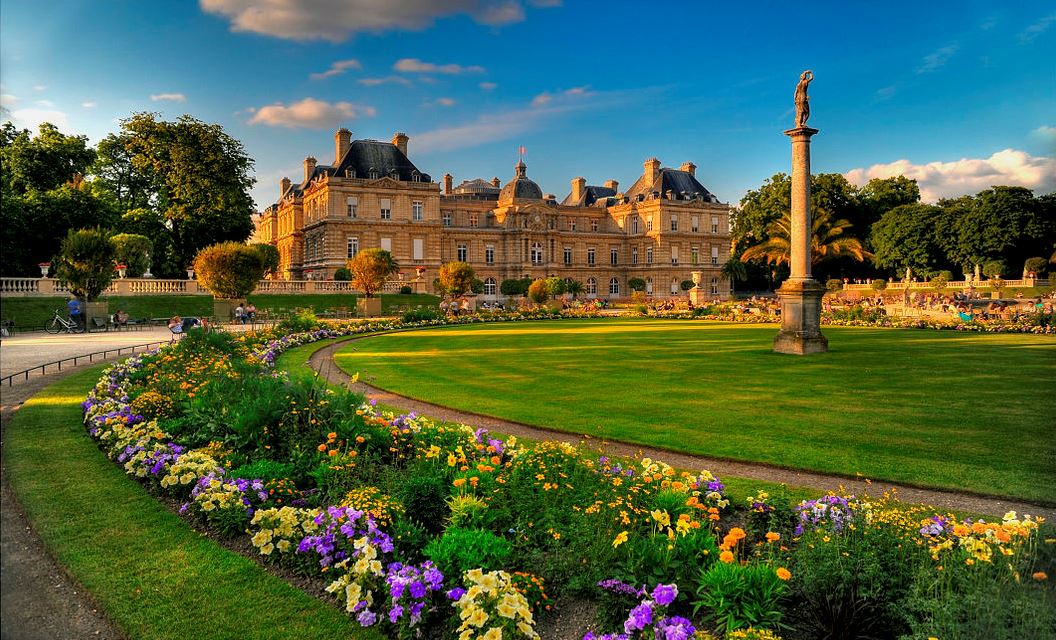
The Jardin du Luxembourg, or the Luxembourg Garden, located in the 6th arrondissement of Paris, was created beginning in 1612 by Marie de' Medici, the widow of King Henry IV of France, for a new residence she constructed, the Luxembourg Palace. It is an inner-city oasis of formal terraces, chestnut groves and lush lawns has a special place in Parisians' hearts. Napoléon dedicated the 23 gracefully laid-out hectares of the Luxembourg Gardens to the children of Paris.

Jardin du Luxembourg

Je vois...
  1. Flowers-des fleurs
  2. Picnics-des picnics
  3. Carousel-carrousel
  4. Wooden sailboats-voiliers en bois

J'entends...une radio - a radio

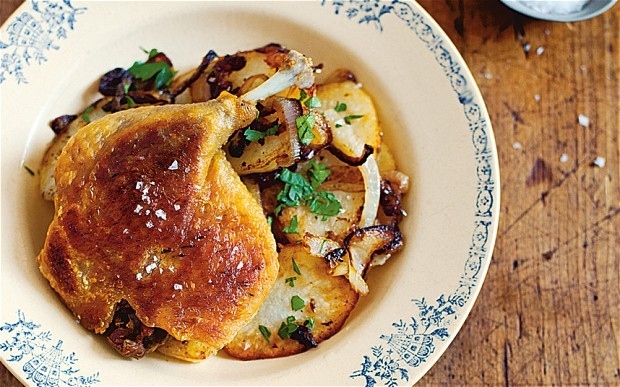
La Repas - Confit de Canard
Confit de Canard

Le Dessert - Tarte Tropezienne